

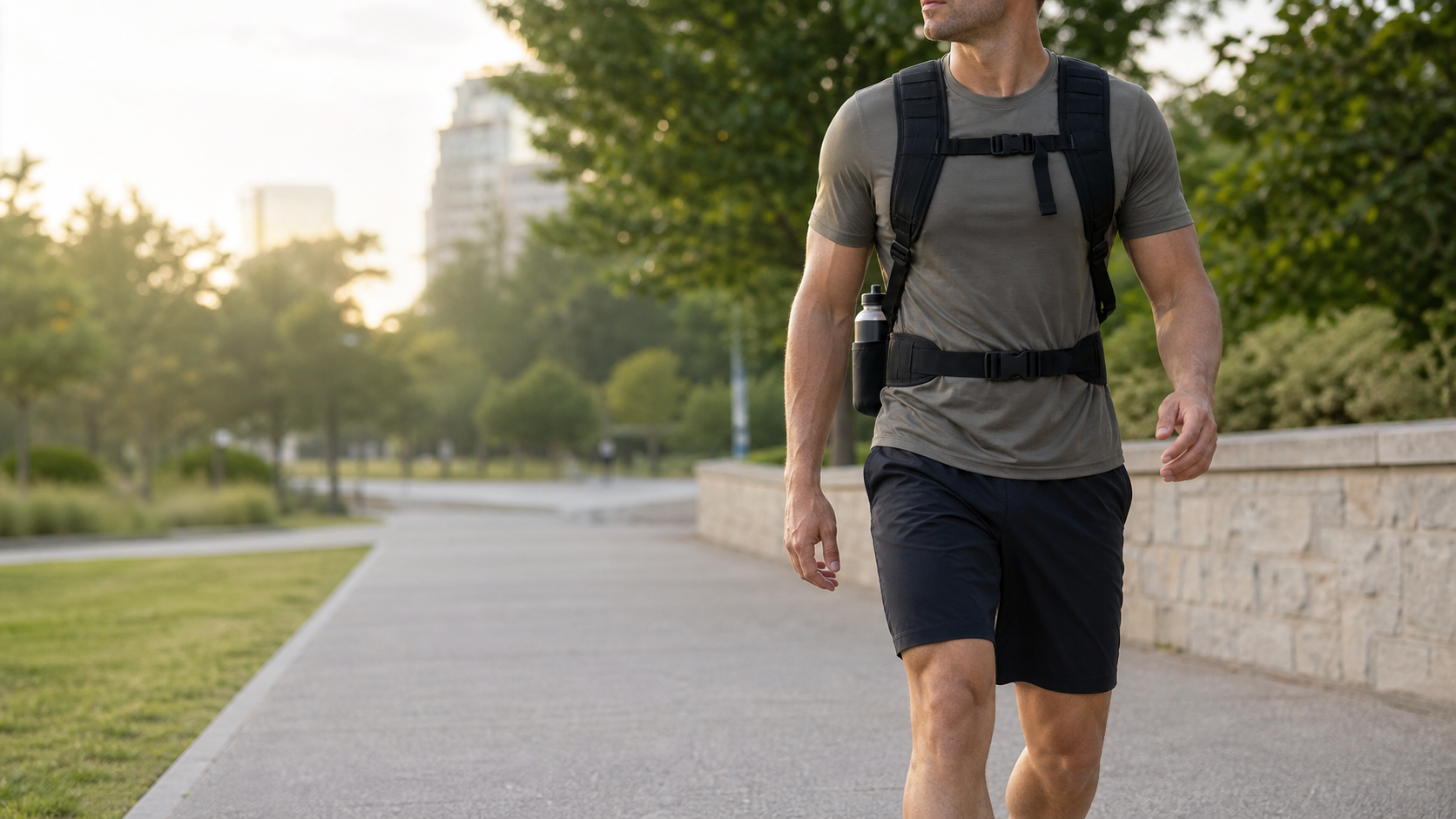
Weighted walking is having a moment. Sometimes it is called rucking. Sometimes it is just a weighted vest and a normal route.
The idea is simple: keep the movement accessible, but ask the body to do a little more work.
That simplicity is why it can be useful. A weighted walk sits between a normal walk and a harder conditioning session. You do not need speed, intervals, or a complicated plan. Add load, keep the pace controlled, and the same route becomes more demanding.
The important word is controlled.
ACSM recently cautioned that weighted vests are useful, but not magic. Their practical guidance is to start light, around 5 percent of body weight, then build gradually. They also noted that wearing a vest all day, especially through twisting and varied movement, may add unnecessary strain.
That is the difference between training and turning every moment into training.
A 2024 Medicine & Science in Sports & Exercise paper on weighted-vest walking helps explain why this matters. The researchers tested healthy military-age adults with different vest loads and treadmill speeds, then validated a model for estimating metabolic cost. The simple takeaway: carried load changes the cost of walking, and the details matter. Weight, speed, grade, surface, and where the load sits all change the session.
That is useful, because it moves rucking out of the hype category and into the same category as any other training tool.
Use it with intent.
If you are new to it, keep the first sessions short. Walk normally. Choose a load you can carry without changing posture or bracing through your lower back. Avoid turning every walk into a loaded walk. Your feet, calves, hips, back, and shoulders still have to adapt.
The goal is not to make walking miserable. It is to add a little more signal to a movement you can repeat consistently.
For some people, that might mean a short vest walk once or twice a week. For others, it might be a light ruck instead of an easy run, or a way to raise effort without chasing pace.
This is the kind of training idea MOTRA cares about: work that may not look dramatic, but still asks something real from the body.
Weighted walking counts when it is used well. Start light. Build slowly. Let the load serve the habit, not the other way around.