

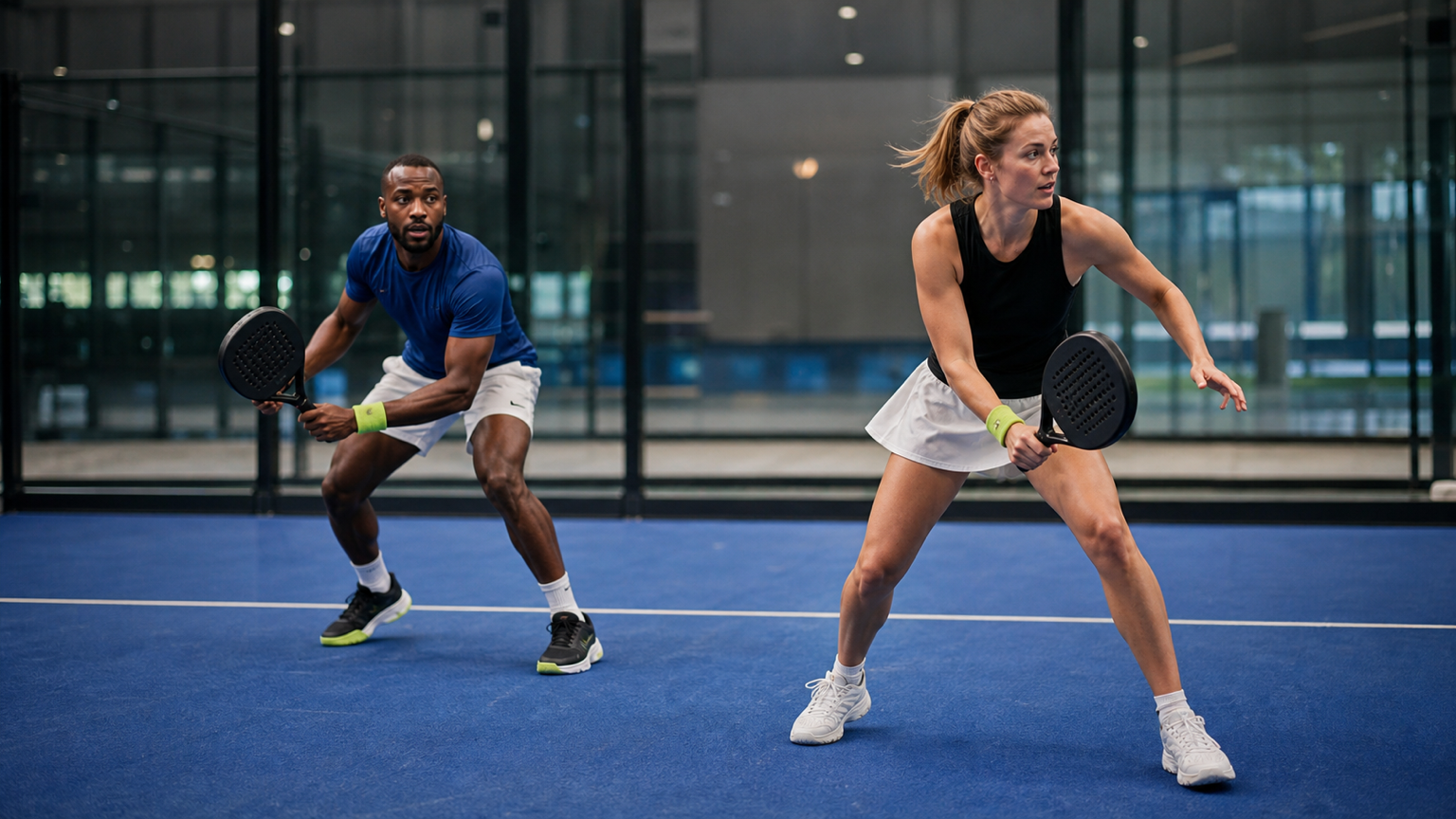
Padel does not feel hard in a tidy way.
One rally is calm. The next asks for a split step, a turn, a chase off the glass, a low volley, then a quick recovery before the ball comes back again.
That rhythm makes the session easy to misread.
You are not moving continuously like a run. You are not lifting a clear load like a barbell. There may be long pauses between points, then three sharp efforts in ten seconds. The work arrives in bursts, and the rest is built into the game.
For newer players, that can make padel feel confusing. It is social, technical, and often fun, so it can seem less serious than a planned workout. Then you finish and feel the legs, hips, calves, shoulders, and lungs in a way the scoreboard did not explain.
The demand comes from repeated changes of direction. You brake, rotate, reach, push off, and react. A single point may not look like much. A full match turns those small spikes into a lot of total work.
That does not mean every game should be treated as a hard session. Skill level, rally length, partner quality, court speed, temperature, and how competitive the match gets all change the load. A casual hit can be light. A close set with long rallies can ask a lot from the body.
A better read is to judge the pattern, not just the duration.
Did you spend the match chasing, lunging, and recovering under pressure? Did the last twenty minutes feel heavier than the first twenty? Are your legs tired because you played hard, or because you were tense and late to the ball?
Those questions matter more than whether the session looked like traditional cardio.
Padel is training with a broken rhythm. It can build skill, coordination, reactive movement, and real cardiovascular demand, but it does it in fragments. Treat it that way when you plan the next day.
The work was not continuous. It was still work.