

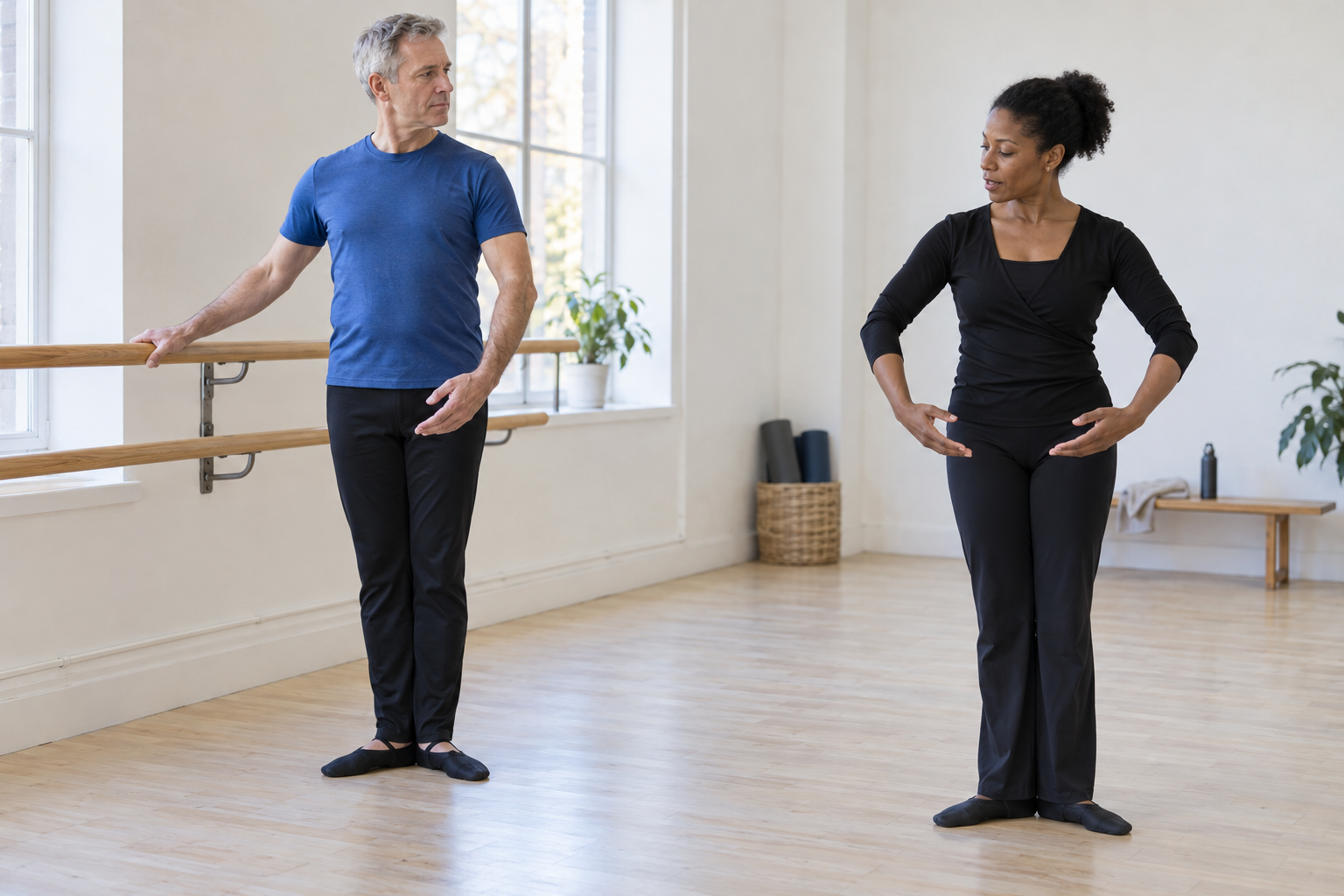
The word “beginner” is only the start of choosing an adult ballet class. Before booking, find out what the teacher expects you to know when you walk into the studio.
The Royal Academy of Dance’s adult class descriptions make the distinction clear. Its Beginners classes welcome people with little or no dance experience. Beginners Plus is for those with some experience. Its General classes expect at least two years of recent ballet training and familiarity with ballet vocabulary.
Those are that school’s definitions. Use them as a reason to read the description at your chosen studio, rather than assuming a familiar label tells you everything.
If you have never taken ballet, look for an explicit welcome for complete beginners. Ask whether the teacher introduces the positions and terms from scratch. A short message explaining your starting point is more useful than trying to guess whether you are “good enough”.
If you danced years ago, say how long it has been and what you remember. Let the teacher suggest a starting class. Previous experience is useful information, but it does not oblige you to pick up at the level where you stopped.
Then check how you would join. Does the class start a new sequence each week, or build on material introduced earlier in the term? Can a new student arrive midway through? These questions help establish whether the next available session is a sensible first one.
Ask about the teaching as well as the timetable. Will movements be demonstrated slowly? Is there time to ask for clarification? Explain any access requirements before booking, and check clothing and footwear expectations before buying kit.
If a trial class is available, use it to assess the instruction. Could you understand what you were being asked to attempt? When you lost the sequence, could you find your place again with the teacher’s help? You do not need to perform every movement successfully to answer those questions.
Afterwards, separate difficulty from missing explanation. Having something new to learn is expected; needing a different introduction is a useful thing to tell the teacher.
Choose a first class that gives you a clear way into the movement. Leave with something you understand better, and a specific question you can bring to the next lesson.