

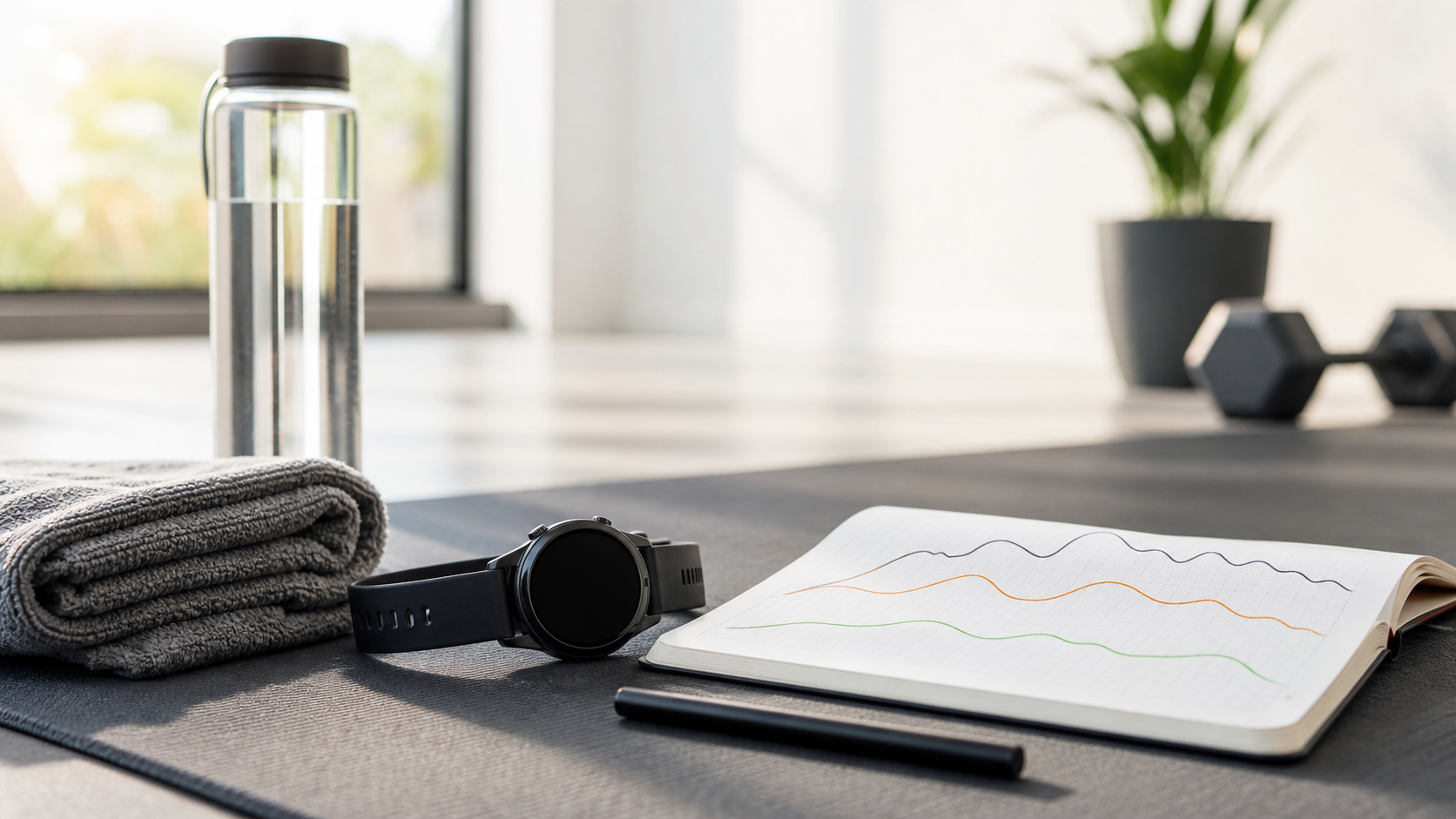
Your wearable is best when it becomes a mirror, not a referee.
A readiness score can be useful. So can resting heart rate, heart rate variability, sleep duration, and workout heart rate. The mistake is treating any one number as a command.
Wearables are now mainstream because they give people something fitness used to lack: feedback between sessions. ACSM's 2026 fitness trends report put wearable technology at the top of its global list. The interesting part is not the ranking. It is what comes next: learning how to use the data well.
That still needs interpretation.
A watch can estimate. It can compare. It can show broad patterns. It cannot fully understand that you slept badly because of travel, that yesterday's workout was emotionally draining, or that your heart rate was higher because the room was hot and you had three coffees.
The useful question is not, "What does the score say I am allowed to do?"
It is, "What has changed from my normal?"
If your resting heart rate is slightly up for one morning, that may mean very little. If it is up for several days, your sleep is poor, and easy training feels unusually hard, that is a clearer signal. If your readiness score is low but you feel fine and the session is low risk, you may not need to cancel everything. You might simply keep the work controlled and see how the warm-up feels.
This is where wearables are strongest: not as single-day verdicts, but as pattern detectors.
They are also better at some jobs than others. Recent validation work on wrist-based heart-rate measurement, including an Apple Watch accuracy meta-analysis and a 2025 study on transient heart-rate changes, points to the same practical lesson: the numbers can be useful, but accuracy changes with device, person, intensity, and movement.
The goal is not to ignore the data. It is to give it the right amount of authority.
Use your wearable to notice drift. Use it to catch when "normal" is quietly changing. Use it to ask better questions before you train.
Then add the human layer: how you feel, what you slept through, what life is asking from you, and what today's session is meant to achieve.
That combination is where better decisions usually live.