

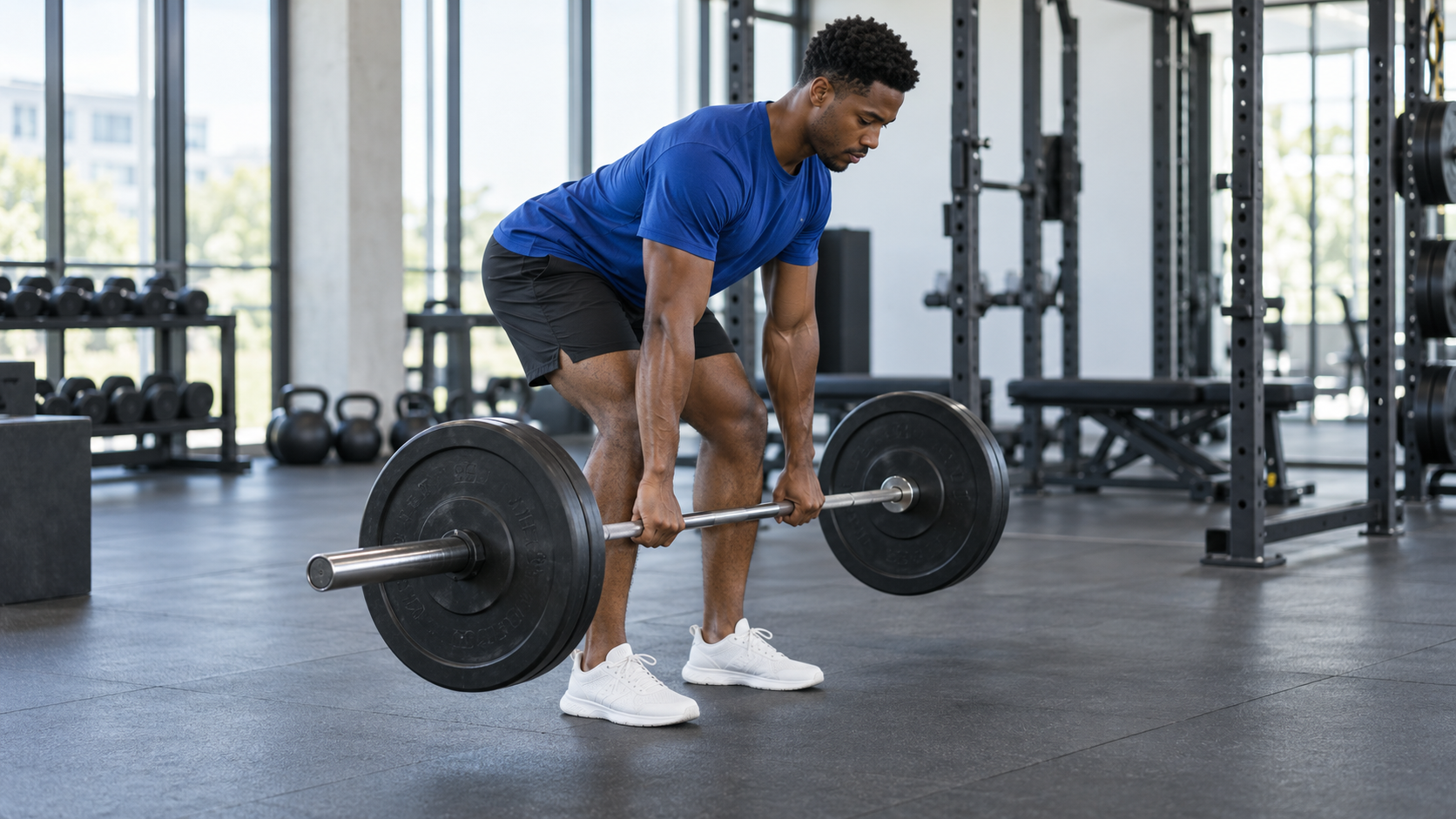
Strength training and stretching often occupy different slots in a programme. Research suggests that boundary can be less rigid: some resistance training can improve flexibility as well.
A trial published in July 2026 analysed 48 physically active adults aged 18 to 25 after six weeks. Participants followed supervised stretching or Romanian deadlift programmes once a week, or continued their usual activity.
Both training groups improved more than the control group on a standing forward-reach test. The average gain was about 1.8cm for resistance training and 3.9cm for stretching. Those figures do not establish that one approach is superior, or that the two are equivalent.
The sessions also included an active warm-up, so the results belong to the complete programmes. The reach test involved several body regions and did not isolate hamstring flexibility. Whether the improvements translated into better everyday movement or sporting performance remains uncertain.
An earlier trial of 18 active young adults found that eight weeks of resistance training and stretching both improved a seated reach test compared with a control group. The resistance group also gained more strength in the tested positions. Again, this was a small study of particular exercises.
My practical reading is to look at the strength work you already do before automatically adding another flexibility routine. Discuss the movement you want to develop with a coach. A controlled hip hinge might belong in that conversation; the research does not mean every lift improves every joint's range.
Keep the question specific. Are you trying to move further through a particular exercise, lift more through your current range, or prepare for a sporting position? Naming the change helps you choose what to practise and what to assess.
Use a load and range you can control comfortably. If the exercise is unfamiliar, get guidance on the movement before copying a research protocol or chasing extra depth.
For MOTRA, this is a reason to keep effort and adaptation distinct. Effort Points reflect verified heart-rate effort in personal zones when suitable data is available. They do not measure your flexibility.
Strength and flexibility can share part of a session. Judge the result by the movement you wanted to develop, alongside the load you can lift.