

A step count is easy to understand. It is also easy to overrate.
Ten thousand steps can come from a brisk walk that lifts breathing and heart rate. It can also come from errands, pacing between calls, shopping, and slow movement broken across the day. Both are real movement. They are not the same training signal.
This is why walking is so interesting right now. Sport England's latest Active Lives release says walking for leisure remains England's most popular activity, with about 22.9 million adults taking part. Walking for transport, along with cycling for transport, stayed around 16.2 million people. The barrier is low. The dose can be high. The missing piece is often intent.
If you want a walk to be training, ask a better question than "how many steps?"
Ask what the walk asked from you.
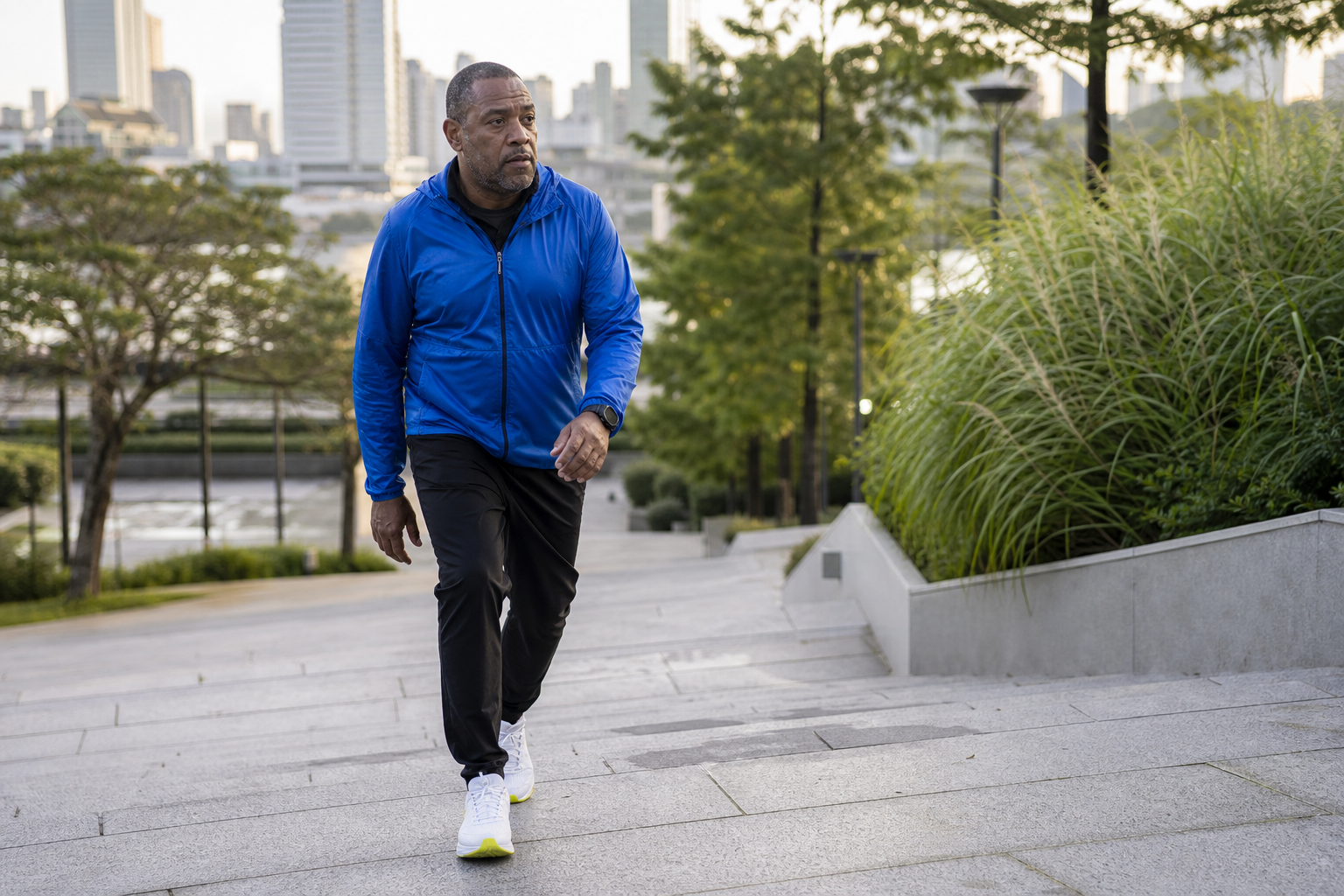
The CDC's physical activity basics list brisk walking at 2.5 mph or faster as a moderate-intensity example. That is not a perfect rule for every person, route or hill. A shorter person, an older adult, a heavy backpack, heat, terrain, fatigue, and fitness level can all change how hard the same pace feels. But it gives the right direction: moderate walking should lift breathing. You should know you are working.
That can look simple. Pick a 20 to 40 minute route. Walk the easy first few minutes. Then settle into a pace where conversation is possible, but not effortless. Use hills, stairs, a backpack or a faster cadence only if they help you reach that effort without turning the session into a strain.
Do not make the step target the hero. A high-step day with no clear effort may be good for general movement. A lower-step walk with sustained pace can be a better training session.
This is especially useful for people who do not want another complicated plan. You can keep walking familiar while changing the demand. Same shoes. Same route. Different intent.
The number at the end still helps. It just should not be the only thing you read.
A walk becomes training when the steps carry enough demand.