

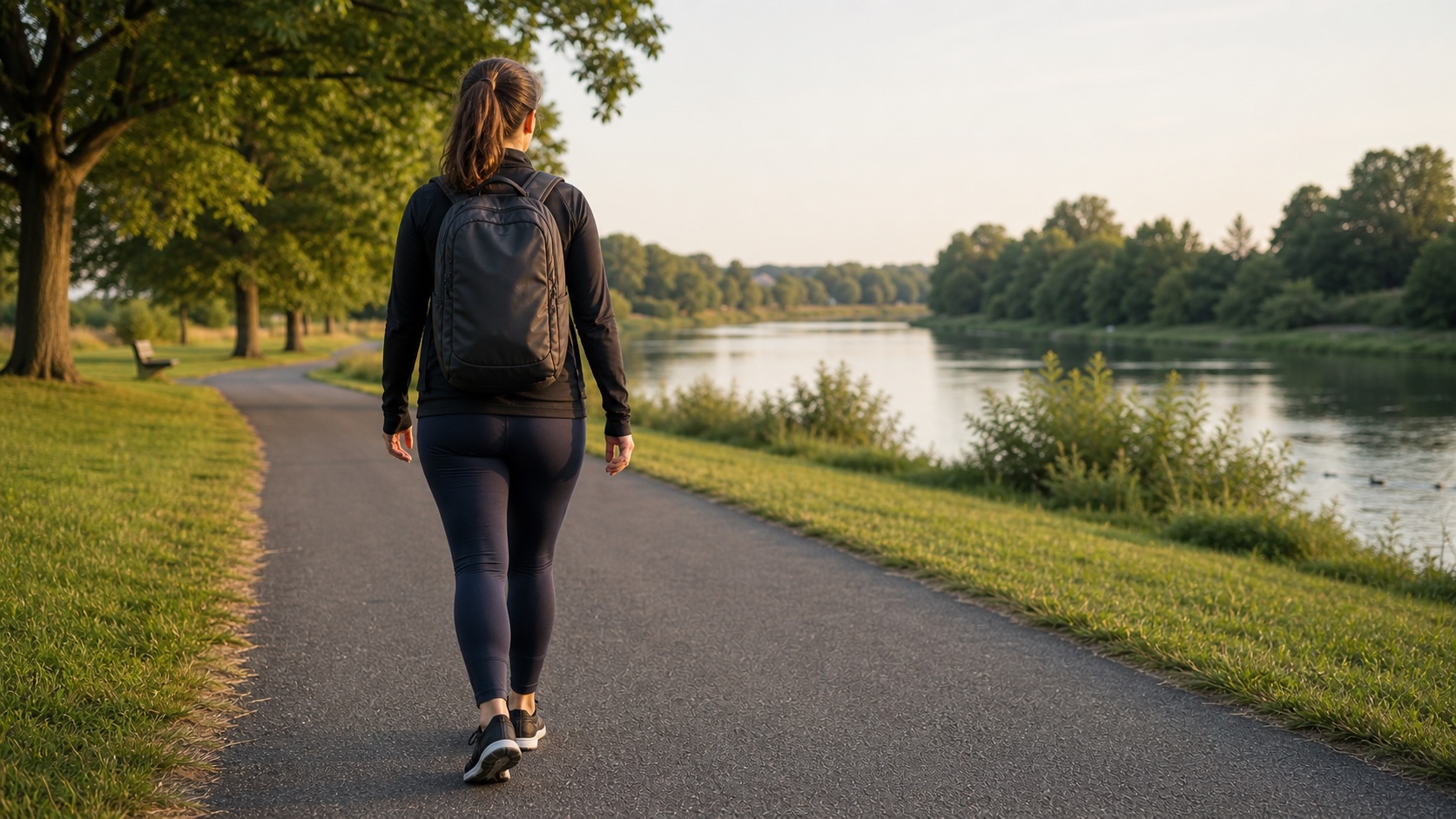
Rucking is walking with weight on your back. That's it. No complicated setup, no specialist gym, no perfect route required. You take something you already know how to do (walking) and add load through a weighted backpack or rucksack.
The result is a simple, low-skill workout that sits somewhere between walking, hiking, and strength training. It raises the effort without needing to run faster, go further, or destroy your legs.
That is what makes rucking interesting.
Most people underestimate walking because it feels too normal. But add 5kg, 10kg, or more in a backpack and the same route quickly becomes a different session. Your heart rate rises. Your legs, hips, trunk, shoulders, and upper back all have to do more work. You are still moving at a manageable pace, but the total demand on the body is higher.
For people who want to build fitness without adding more high-impact running, rucking is a strong option. It can improve aerobic fitness, build muscular endurance, increase calorie burn, and make everyday walking feel more purposeful. It is also easy to fit into real life. Dog walk, commute, weekend walk, lunch break. Add a backpack and it becomes training.
The key is not to be stupid with it.
Start light. Around 5 to 10 percent of bodyweight is enough for most beginners. If you weigh 80kg, that means starting somewhere around 4 to 8kg. Use a comfortable backpack, keep the weight high and close to your back, and avoid anything sharp or loose digging into you. Books, weight plates wrapped in a towel, water bottles, or sandbags can all work.
Begin with 20 to 30 minutes on flat ground. Keep your posture tall, walk naturally, and do not chase pain. Your feet, calves, knees, hips, and lower back need time to adapt. Once it feels comfortable, progress one thing at a time: add a little more weight, walk slightly further, increase pace, or include hills. Do not increase all of them at once.
A good simple progression could look like this: two rucks per week, 20 to 40 minutes each, starting with a load that feels controlled. When that feels easy for a couple of weeks, add 1 to 2kg or extend the walk slightly. The goal is sustainable effort, not proving a point.
This is also where rucking fits naturally into MOTRA.
MOTRA is built around effort. Not pace. Not distance. Not who has the best genetics. Effort.
A weighted walk is a perfect example of that. Two people might cover the same 3km route, but the person carrying a rucksack is doing more work. Their heart rate, intensity, and time under load tell a better story than distance alone.
When tracked through your wearable, rucking can become part of your wider effort profile. If the extra load raises your intensity, that effort can be reflected through EP. It means a walk can become more than steps. It becomes measurable work.
That is the bigger point.
Training does not always need to be extreme. Sometimes the best workouts are the ones you can repeat consistently. Rucking makes walking harder, but not complicated. It gives people another way to build fitness, earn effort, and make everyday movement count.
Pack light. Build slowly. Track the effort.
Then let the work speak for itself.