

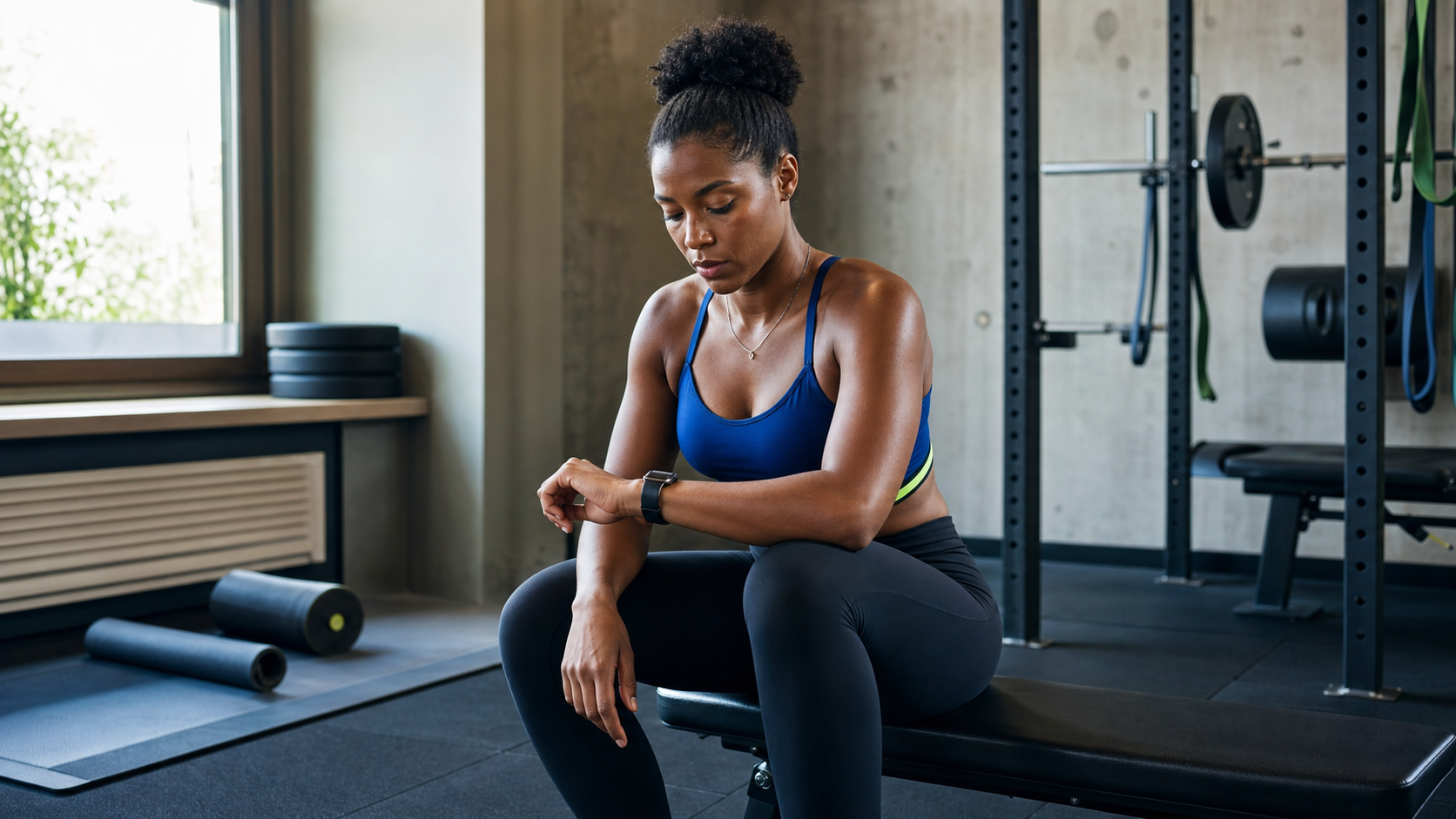
Your watch can be useful without being in charge.
Recovery scores, readiness scores, sleep scores and HRV trends are becoming normal parts of training. That is mostly a good thing. In its 2026 fitness trends report, ACSM ranked wearable technology as the top trend again, while also noting that some device metrics still need careful interpretation.
A wearable can notice patterns you might miss: a few nights of poor sleep, a higher resting heart rate, a dip in HRV, or a week where your body is carrying more strain than your plan admits.
The mistake is treating one score like a verdict.
A low readiness number does not automatically mean you should cancel training. A high score does not automatically mean you should chase a personal best. These numbers are estimates built from imperfect signals. They can help you pause and ask better questions, but they cannot know the full context of your life.
That context matters. A 2026 Sensors paper on wearables and HRV found a disconnect between self-reported wellbeing and HRV, and argued that readiness-style recommendations need cautious interpretation, especially over short time windows.
That does not make the data useless. It makes judgement more important.
Did you sleep badly because of stress, travel, alcohol, a hard session, or a child waking you up at 3am? Do your legs feel heavy, or do you simply feel unmotivated? Is today’s workout meant to be hard, easy, technical, social, restorative, or just consistent?
Those answers matter too.
The best way to use a readiness score is to combine it with three simple checks: how you feel, what the session is for, and what the last few days looked like. If the score is low and you feel flat, adjust the session. Keep the habit, lower the cost. Walk, lift lighter, reduce the intervals, or move the hard work to tomorrow.
If the score is low but you feel good, start conservatively. Warm up properly. See how the first 10 minutes feel. Let the body confirm the data.
If the score is high, still respect the plan. Fitness is not built by turning every green light into a max effort. It is built by stacking the right work at the right time.
The point is not to ignore the device. The point is to put it in the right role.
A wearable gives you another signal. Your job is to interpret it with judgement.