

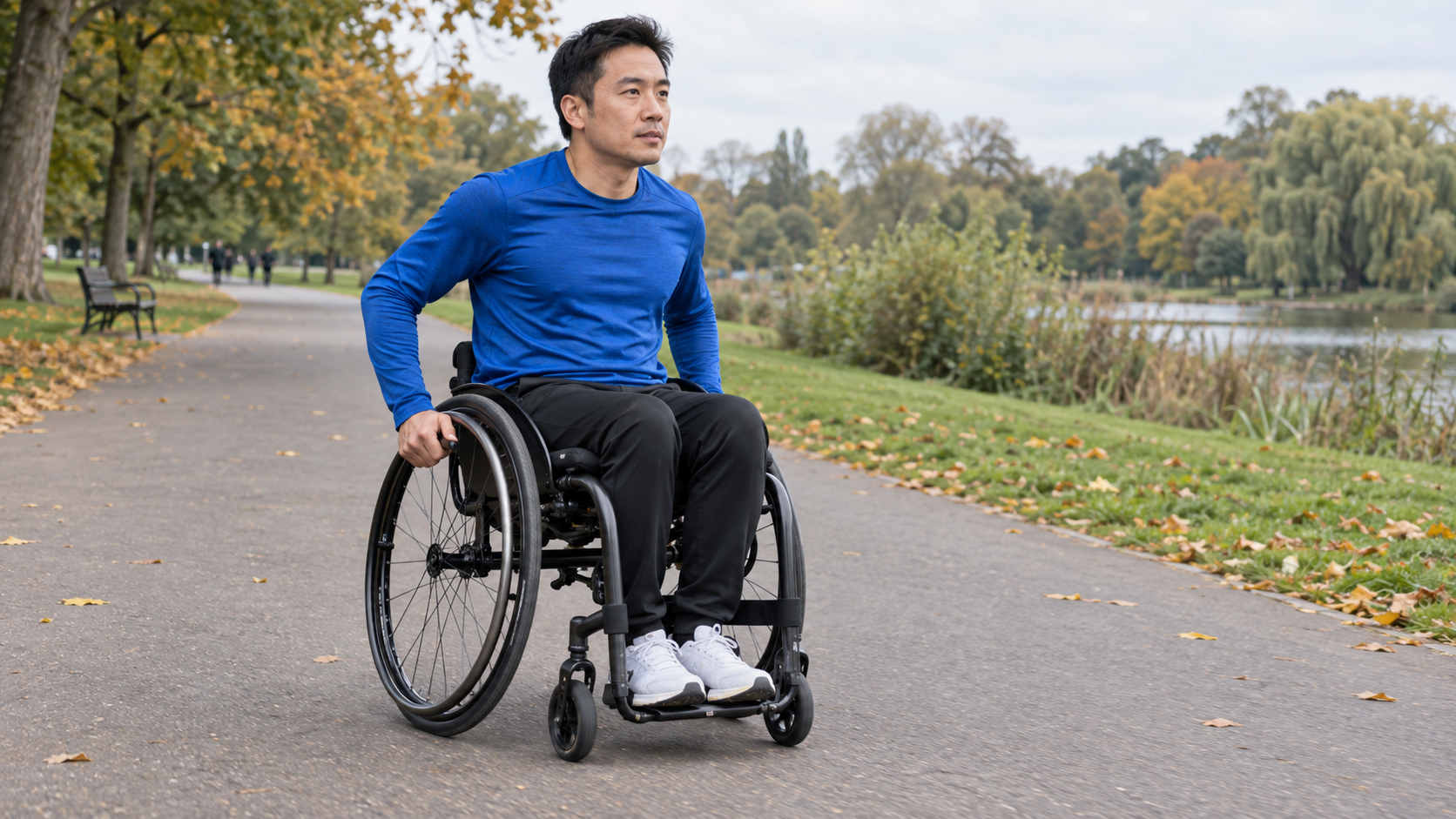
A narrow gate or an unexpected stretch of loose gravel can change an outdoor wheeling session before the exercise begins. Useful access information needs to describe what is actually on the ground.
Natural England's People and Nature report, published on 9 September 2026, found that 62% of adults in England who had not visited a green space in the previous fortnight would have liked to spend more free time outside. Among non-visitors who reported concerns, missing facilities featured alongside anti-social behaviour and visiting after dark.
These are population findings about outdoor visits, not a wheelchair-access audit or a measure of exercise participation. They do, however, make facilities and access part of the conversation about getting outdoors.
For wheelchair users planning a park workout, a general accessibility label leaves important questions open. Which entrance connects to the usable path? What is the surface? Are there slopes across it as well as along it? Can you reach the facilities you need?
Disabled Ramblers' route categories consider surfaces, gradients and cambers (sideways slopes). The organisation also explains that the challenge depends on the mobility vehicle being used. A route grade needs to be read alongside your own equipment and experience.
There are useful examples of more detailed information. The National Trust's Osterley access page identifies different path surfaces, describes areas with slopes and uneven ground, and links to measurements and photographs. That gives a visitor specific details to assess before travelling.
For an unfamiliar exercise route, look for the same detail from arrival to departure. Check entrance widths, surface changes, the route to accessible toilets and current opening arrangements. If a description is vague, ask the site team about the particular section you intend to use.
The wider implication for outdoor fitness is practical. Promoting a park as somewhere to exercise works better when people can judge whether its paths and facilities suit them. Clear descriptions also give visitors a way to identify where an improvement is needed.
A useful access guide lets you choose the effort you want from the session, with fewer unanswered questions about reaching it. The standard is specific information about the whole visit, from the entrance to the journey home.