

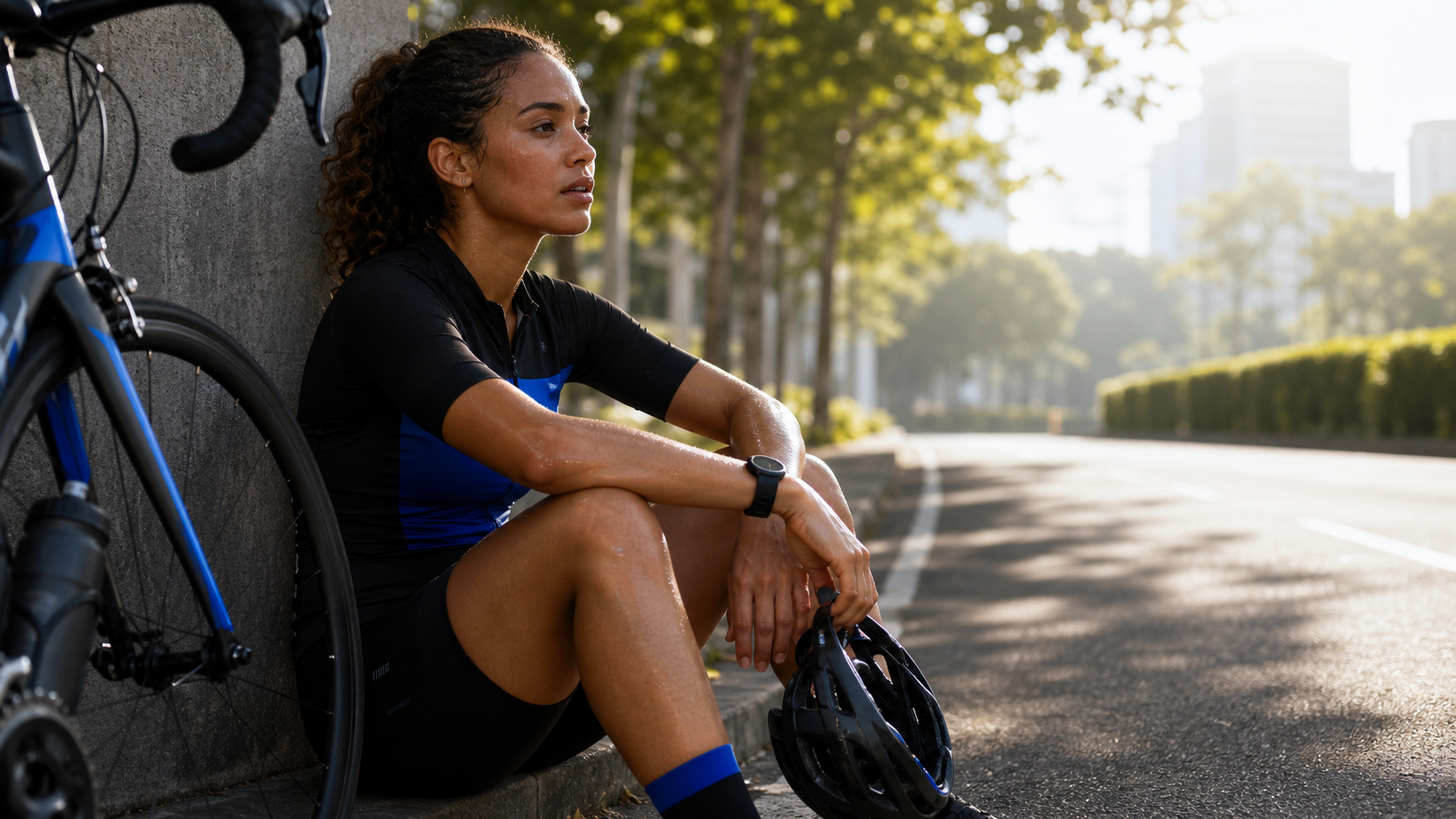
Hot weather makes pace less clean. The same route, same bike, same gym circuit, or same ruck can cost more when the air is heavy and your body is fighting to stay cool.
That is not weakness. It is physiology.
When you train in heat, your body has two jobs at once. It still has to power the session, but it also has to move blood toward the skin, sweat, and manage rising temperature. That extra demand can push heart rate higher, make breathing feel sharper, and turn a normal session into something more expensive.
ACSM's hot-weather guidance lists a higher-than-normal heart rate during exercise as one of the signs to pay attention to on hot days. A 2025 Frontiers in Physiology study on interval training in hot conditions also highlights the problem coaches already know: heart rate, perceived effort, work rate, thermal strain, and fatigue do not always move neatly together.
This is why output alone can be misleading.
If you chase the same pace in July that felt easy in April, you may accidentally turn an aerobic day into a hard one. If you judge a ride only by average speed, you can miss the fact that wind, heat, and dehydration changed the cost. If you dismiss a slower session because the numbers look ordinary, you may ignore the work your body actually did.
The practical move is simple: keep the goal, adjust the expression.
On hot days, warm up longer and decide by feel, heart rate, and conditions. Start easier than your ego wants. Add recovery. Shorten the hard part if your heart rate drifts upward at the same output. Stop if dizziness, confusion, disorientation, unusual weakness, extreme thirst, or very rapid breathing shows up. That is not training data. That is a warning.
This is also one of the reasons MOTRA is built around verified effort and Effort Points. Fitness should not only reward the cleanest output metric. A hot ride, a humid ruck, a slow but honest conditioning session, or a controlled gym circuit can all create real effort even when pace and distance do not flatter you.
The lesson is not to fear heat.
It is to stop pretending the environment is invisible. Good training asks what the session cost, not just what the scoreboard says.