

Balance work has a branding problem. It gets treated like warm-up filler, rehab, or something saved for later life. That misses the point. Balance is not separate from strength. It is one of the ways strength becomes usable.
Every lunge, carry, hinge, change of direction, ride out of the saddle, or heavy step down a hill asks the same question: can you control force while your body is moving and your base is imperfect? If the answer is no, the weight on the bar only tells part of the story.
This is why balance, flow, and core strength appearing in ACSM's 2026 fitness trends makes sense. The useful version is not wobbling on random unstable toys until everything feels shaky. It is building control into movements you already care about.
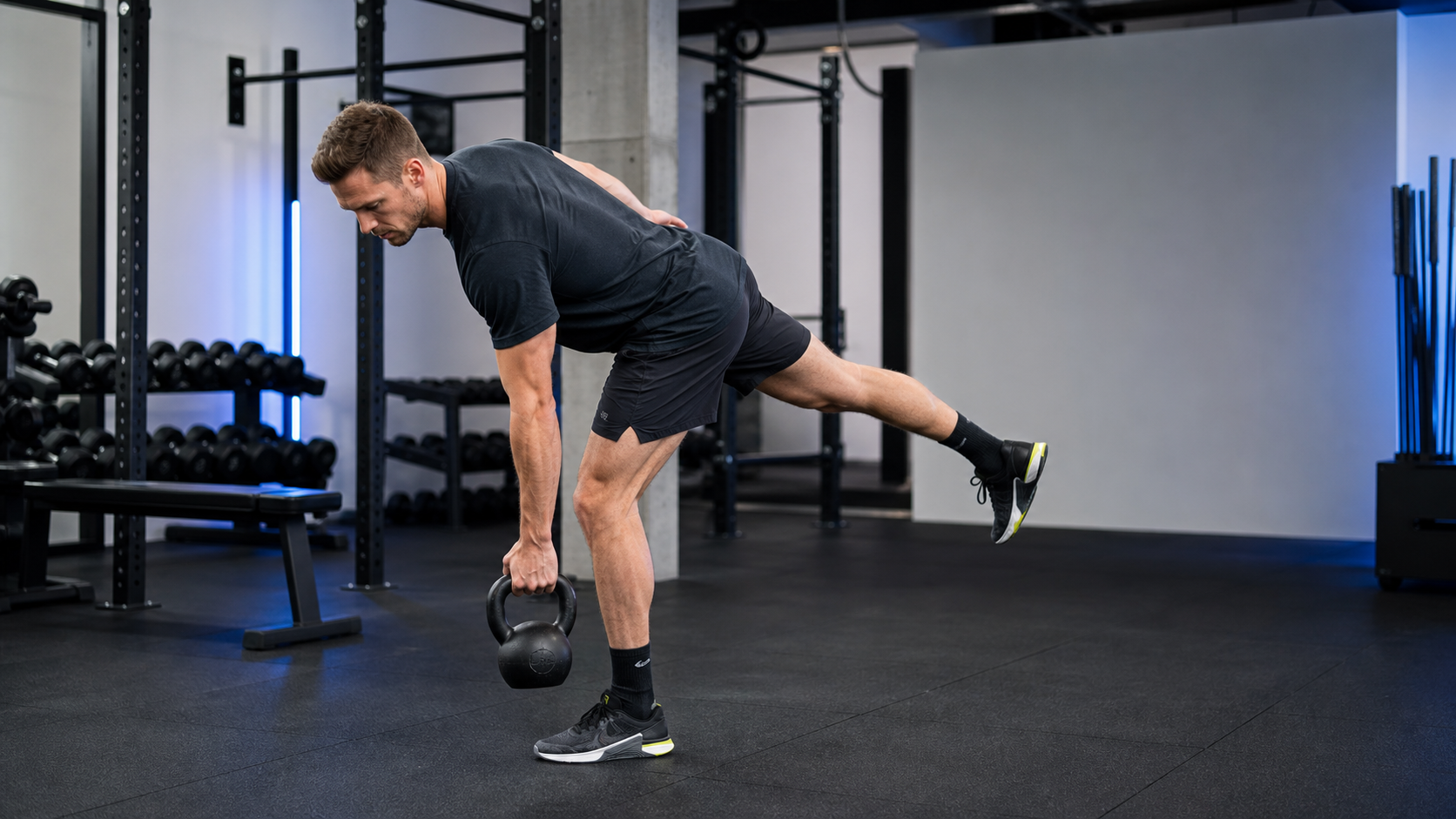
A good starting point is simple: make one or two exercises slower, cleaner, and less symmetrical. A split squat with a pause. A single-leg Romanian deadlift with a light kettlebell. A suitcase carry. A step-down where the knee tracks cleanly and the foot stays quiet. None of it needs to look impressive.
The science is not saying balance drills are magic. A 2024 systematic review and meta-analysis of neuromuscular training in healthy athletes found improvements in dynamic balance, but also noted limitations and variation between studies. That is the right level of confidence. Balance work is useful, especially when it is specific, progressive, and coached by the movement you actually want to improve.
The mistake is making it too weird too quickly. If you cannot control a bodyweight split squat, standing on a wobble board with a dumbbell is probably not the next smart step. Start stable enough to own the position. Then add range, load, tempo, fatigue, or sport-like movement gradually.
Two minutes at the end of a session can be enough to start. Pick one pattern. Do three slow sets. Stop before it turns messy.
The goal is not to become good at balance drills. The goal is to make normal training feel more reliable.