

Fitness has become very good at measuring what moves through space.
Miles. Pace. Steps. Elevation. Speed. Split times.
Those numbers matter. They make running and cycling easy to understand. They also create a blind spot.
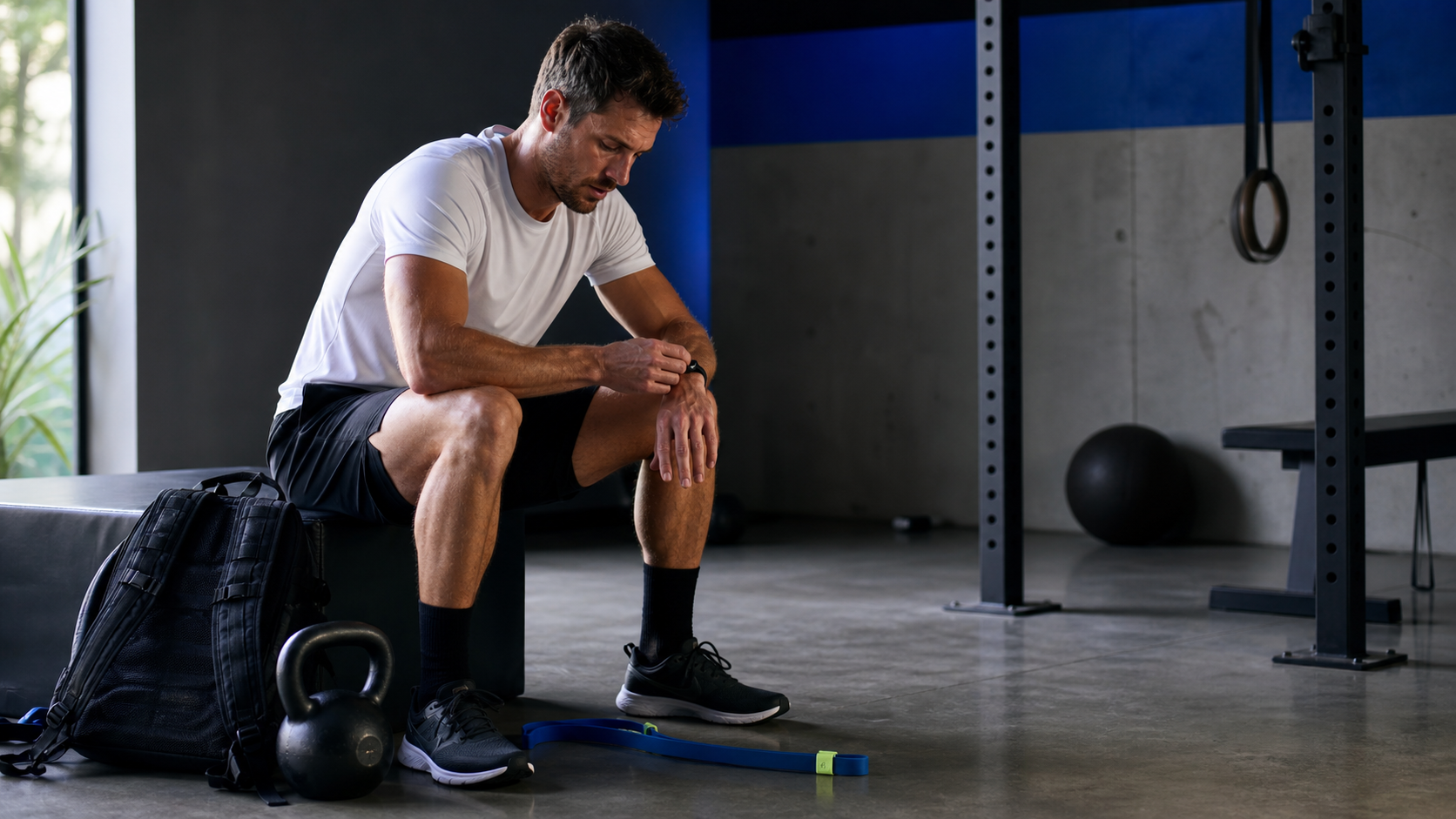
A hard gym circuit, loaded carry, kettlebell session, five-a-side match, ruck, or mixed conditioning day may not produce a clean distance number. That does not mean it was less real. It means the output was harder to package.
That gap matters more now because wearable data is becoming normal. ACSM's 2026 fitness trends report put wearable technology at number one again, describing devices that capture heart rate, distance, speed, steps, and trend data. The next useful step is not just collecting more numbers. It is choosing the right signal for the workout in front of you.
Strength and mixed training are harder to score because load is not only cardiovascular. Form, tempo, range, rest, external weight, and intent all matter. A 2025 Sensors paper on gamifying resistance training made that point clearly: aerobic training has been gamified heavily, while resistance training has had less attention partly because the useful variables are more complex.
So effort-based systems need humility.
Heart rate is not a perfect measure of every rep. A heavy set with long rest can be valuable without looking like a hard run. A technical lift can matter even if the watch does not understand it. A wearable can show internal strain, but it cannot replace judgement, programming, or coaching.
Still, heart-rate effort gives mixed training something most fitness apps have struggled to provide: a common language.
It lets a ride, a ruck, a circuit, and a hard sport session sit on the same page without pretending they are the same thing. A 2025 Scientific Reports pilot study on strength training and heart-rate variability is a useful reminder that even body position can change autonomic responses during resistance work. The body reacts to context.
That is why MOTRA is built around verified effort. Not because one metric explains everything, but because effort is a better starting point than distance alone.
Effort Points are a way to make real work visible across different sessions when heart-rate data is available. The point is not to turn every workout into a scoreboard. It is to recognise that training has more than one shape.
The finish line is useful.
It just should not be the only thing that counts.